
DAY 1: Arrival at Rivertrees — Arusha
Arrival at Kilimanjaro International Airport and private transfer to Rivertrees Country Inn — one of the finest small lodges in the Arusha area, set in lush tropical gardens with the sound of the Usa River audible from every room. Rivertrees provides a genuinely peaceful introduction to Tanzania: the gardens attract an impressive range of birdlife, and the lodge's atmosphere is warm, unhurried, and restorative after long international travel.
Your guide will meet you for dinner and a detailed briefing, covering the itinerary in full, the specific photography opportunities each location offers, and the technical considerations — light direction, golden hours, expected wildlife behaviour — for each park. This briefing is the beginning of a collaborative relationship between photographer and guide that deepens across the nine days. Overnight at Rivertrees.

DAY 2: Tarangire National Park — Opening the Eye
The decision to open this photographic safari at Tarangire rather than Lake Manyara or Ngorongoro is deliberate. Tarangire's combination of landscape elements — the monumental baobabs, the river corridor, the elephant herds, the open savannah with its varied light — provides an ideal environment for a photographer to calibrate their eye and begin working through the technical and compositional challenges of wildlife photography in an African context.
The elephant herds of Tarangire are among the most photogenic subjects in East Africa. Their scale, their social complexity, and their accessibility along the river make extended shooting sessions possible — time to move through the full range of compositions from wide environmental portraits to intimate behavioural details. The afternoon light in Tarangire, catching the red dust raised by elephant movement against the baobab silhouettes, is extraordinary. Overnight in Tarangire.
DAY 3: Tarangire — Deeper into the Wilderness
A second full day in Tarangire, allocated specifically to the Silale Swamp area. This permanent water source draws wildlife from across the park during the dry months, creating an extraordinary concentration of species around its marshy edges. Elephants arrive in family groups throughout the day, their movements predictable enough to allow considered composition while remaining entirely natural.
The broader landscape around Silale offers exceptional opportunities for the kind of patient, extended wildlife photography that distinguishes a photographic safari from a conventional game drive. Predators — lions and leopards — are present and regularly active. The bird diversity is exceptional: ground hornbills, secretary birds, and a range of raptors offer the kind of dramatic subjects that reward a telephoto approach. The day ends with private sundowners in the bush as the light fails completely and the sounds of the African night begin. Overnight in Tarangire.

DAY 4: Ngorongoro Crater — Light, Drama, and the Big Five
The drive to Ngorongoro takes you north through the Arusha landscape and into the Conservation Area's highland approaches. An early arrival at the crater rim allows for the descent to the floor during the most productive predator hour of the morning, when the angle of the light is low and warm and the shadows are long — the conditions that make wildlife photographs extraordinary rather than merely competent.
The Ngorongoro Crater presents specific photographic challenges and rewards. The proximity of wildlife — in a contained ecosystem where animals are habituated to vehicles — allows for the kind of intimate portrait work rarely possible in more open environments. The challenge lies in managing backgrounds and compositions in a landscape that can be busy with other vehicles at peak times. Your guide will position strategically, often beginning in the less-visited eastern sectors before moving to the areas of greatest wildlife concentration as the morning develops.
The crater's famous soda lake — Lake Magadi — provides one of Africa's great wide-angle opportunities: thousands of flamingos against the crater wall backdrop, with the symmetrical geometry of the caldera creating a natural frame. Overnight on the crater rim.
DAY 5: Northern Serengeti — Into Crossing Country
The drive north through the Serengeti to the Kogatende area covers considerable ground, but the journey itself is rich in wildlife and photographic opportunity. The Serengeti's varied habitats — from the open short-grass plains of the south to the denser, more complex ecosystems of the north — reveal different species assemblages and different compositional possibilities as you travel. Your guide will stop for significant wildlife encounters throughout the drive rather than rushing the transit.
By mid-afternoon, you are in the northern Serengeti — the country of the river crossing. The Mara River, the Kogatende plains, and the Lamai Wedge north of the river represent the climax of the annual migration cycle and the goal of this safari. Your guide will assess conditions upon arrival — the position of the herds, the state of the river, recent crossing activity — and plan the following days' game drive routes accordingly. Overnight in a camp positioned for immediate access to the crossing zones.

DAY 6: Full Day Photography — The Northern Serengeti
A complete day in the northern Serengeti, entirely dedicated to river crossing activity and the broader wildlife photography that this region offers year-round. Beyond the migration crossings, the northern Serengeti is exceptional predator country: resident lion prides, leopards in the riverine woodland, cheetahs on the open kopje grassland, and occasional wild dog sightings in the more remote northern areas.
The tactical approach to a crossing day requires patience and discipline. Your guide will position the vehicle at the river early and read the behaviour of the assembling herds — the gathering at the bank, the testing of the water, the particular electric tension that precedes a crossing. When the crossing comes, it is explosive: a simultaneous decision by thousands of animals that creates a wall of sound, movement, and dust entirely unlike anything else in nature. As a photographer, you will have prepared your settings, your composition, and your reactions in advance. The guide ensures you are in position. The rest is instinct and execution.
The famous Serengeti sunset — photographed from every angle across the decades — never becomes ordinary when experienced from within the park rather than from behind a screen. Overnight in the northern Serengeti.
DAY 7: Northern Serengeti — The Nyamalumbwa Region
A third day in the northern Serengeti, focusing on the Nyamalumbwa area — a region of exceptional wildlife activity that rewards a more methodical approach. The landscape here, with its mixture of rocky kopjes, open grassland corridors, and riverine woodland, is structurally more complex than the open plains of the south and provides more diverse compositional options for the photographer.
Lion activity in Nyamalumbwa is consistently high during the crossing season, as multiple prides converge to exploit the abundance of prey. Extended time with a single pride — watching the social dynamics, the play behaviour of cubs, the interaction between adults, the sequence of events around a hunt — produces a depth of photographic coverage that is qualitatively different from a series of brief encounters across multiple sightings. This is the philosophy of the photographic safari: depth over breadth. Overnight in the northern Serengeti.
DAY 8: Sand River — The Kenya Border Country
The Sand River marks the Tanzania-Kenya border in the far north of the Serengeti, and the country around it has a distinctive character: the vegetation is denser, the river course is lined with fig trees and lush riparian growth, and the wildlife is both varied and surprisingly intimate in the more enclosed spaces. Leopards are reliably encountered in this riverine habitat, and the diversity of smaller mammals — serval, mongoose, genet — rewards a slower, more exploratory driving pace.
The light along the Sand River in the early morning, filtered through the canopy and catching the dust motes above the water, creates conditions that produce images quite unlike those from the open plains — softer, more atmospheric, more suggestive of the forest edge habitats that these species prefer. An afternoon drive through open country north of the river may offer elephant sightings against a landscape that extends uninterrupted into Kenya's Maasai Mara. Overnight at Nasikia Mobile Migration Camp — a camp positioned and designed specifically for the river crossing season.
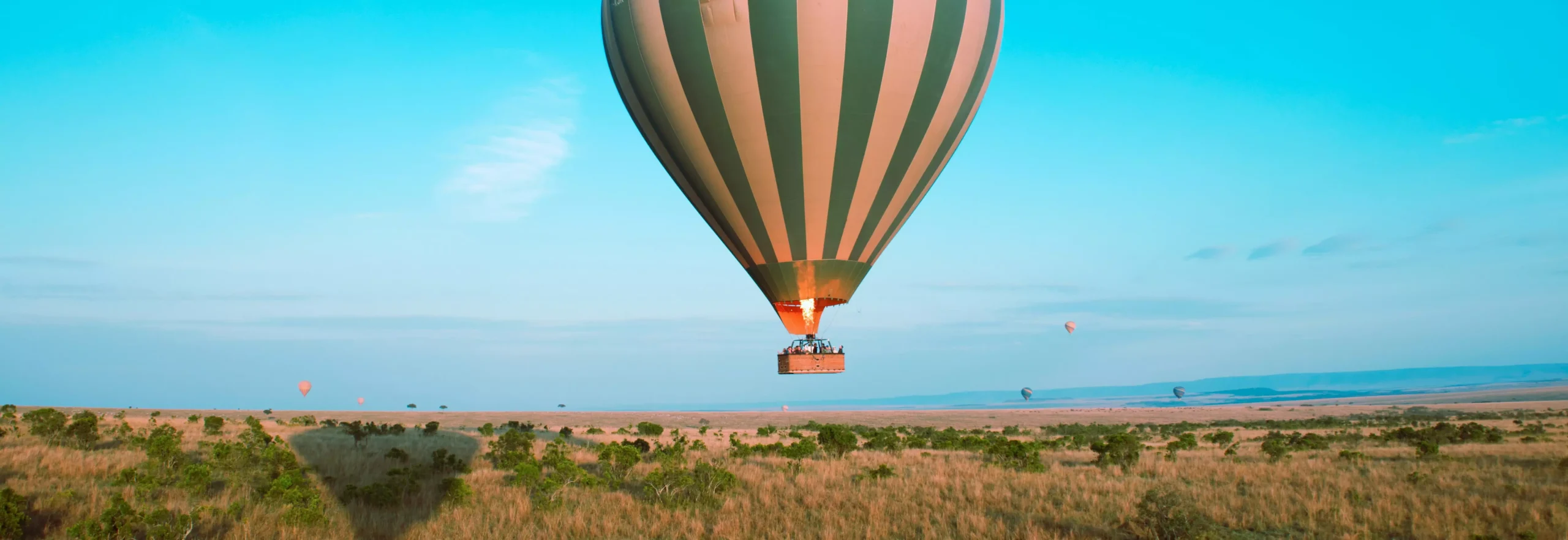
DAY 9 : Scenic Flight and Departure
An early final game drive as the sun rises over the northern Serengeti — the last golden hour, the last positioning for predators in the morning light, the last opportunity to add to the photographic record of nine extraordinary days. Transfer to the Kogatende airstrip for the scheduled scenic flight back to Kilimanjaro International Airport: a final aerial perspective on the Serengeti ecosystem, the crater highlands, and the Rift Valley escarpment visible beneath the aircraft.
Your departure from Tanzania carries with it not only an archive of images but a revised understanding of the natural world — deepened by nine days of expert guidance, patient observation, and genuine encounter with some of the most extraordinary wildlife on Earth. For those wishing to extend their journey, Zanzibar beach extensions can be arranged from either Kilimanjaro or Dar es Salaam.