
DAY 1: Arrival in Arusha — The Safari Capital
Your journey begins at Kilimanjaro International Airport, where the JUA EXPLORER team meets you personally for your transfer into Arusha. Tanzania's safari capital sits at 1,400 metres above sea level, encircled by highland coffee farms and presided over by the symmetrical cone of Mount Meru — Africa's fifth highest peak. The city is animated and culturally rich, a genuine crossroads of East African life.
This first evening is yours for rest and preparation. Your guide will conduct a thorough safari briefing over dinner, covering the parks ahead, wildlife expectations, photographic conditions, and practical details for the days to come. Early rest is recommended — the African bush keeps early hours.

DAY 2: Lake Manyara National Park — An Ecological Mosaic
Lake Manyara National Park is the perfect opening chapter to a Northern Tanzania safari — compact, varied, and reliably spectacular. The park's entrance cuts through a dense groundwater forest where the tree canopy shelters Sykes' monkeys and colobus in the upper branches, while enormous troops of olive baboons move through the understorey with proprietorial confidence. Elephant families drift silently through the fig trees, and the forest floor is carpeted with ferns and filtered light.
As the vegetation transitions from forest to floodplain and finally to the alkaline lakeshore, the wildlife character shifts dramatically. Open areas reveal giraffe, buffalo, and impala; the lake margins host one of Tanzania's finest birdwatching environments, with flamingos colouring the shallows pink, pelicans fishing in communal formations, and fish eagles calling from dead acacia snags above the waterline.
Lake Manyara holds a specific curiosity that has fascinated naturalists for decades: lions that habitually rest in trees. This behaviour — observed here and in very few other locations on the continent — is thought to relate to the park's dense fly populations and its elevated humidity. Your guide will know the territories of these prides and position accordingly. Overnight at a lodge set above the Rift Valley escarpment.
DAY 3: Ngorongoro Crater — The Closed World
The Ngorongoro Crater is a place that rewards the act of arrival. The ascent through montane forest to the crater rim, the first panoramic view across twenty kilometres of collapsed volcanic caldera, the descent down the crater wall into a world that operates according to its own ecological logic — these are experiences that no preparation fully anticipates.
The crater floor sustains one of the greatest densities of large mammals anywhere on Earth: an estimated 25,000 large animals resident within its 260 square kilometre interior. Lion prides patrol their territories with measured authority; buffalo herds blacken the central grassland; elephant bulls — many bearing tusks of exceptional size developed over a lifetime of protected living — move between the fever tree forest and the crater lake.
The black rhinoceros population within the crater is among the most significant in East Africa, numbering approximately twenty individuals. Their presence here, slowly rebuilding after decades of poaching pressure, represents one of Tanzania's most important conservation achievements. Sightings are not guaranteed, but nowhere else in Tanzania do the odds favour the visitor more strongly. A full day in the crater with a bush picnic lunch before ascending to the rim for overnight.
DAYS 4 & 5: Serengeti National Park — Two Days in the Endless Plains
The drive from the Ngorongoro Highlands onto the Serengeti Plains is a theatrical experience. The land flattens, the vegetation opens, the horizon recedes to an improbable distance, and the wildlife appears — first in ones and twos, then in dozens, then in herds that stretch across the landscape like a moving tide. You have entered one of the world's great wilderness areas.
Two full days in the Serengeti allows your guide to read the park properly. The Seronera Valley — the ecological heart of the central Serengeti — supports the densest year-round concentration of predators in the park, its resident lion prides among the most studied in the world. Leopards inhabit the riverine forest here, and your guide will know the regular haunts where they are most reliably found — resting in the branches above a cached kill, or moving through the undergrowth in the late afternoon.
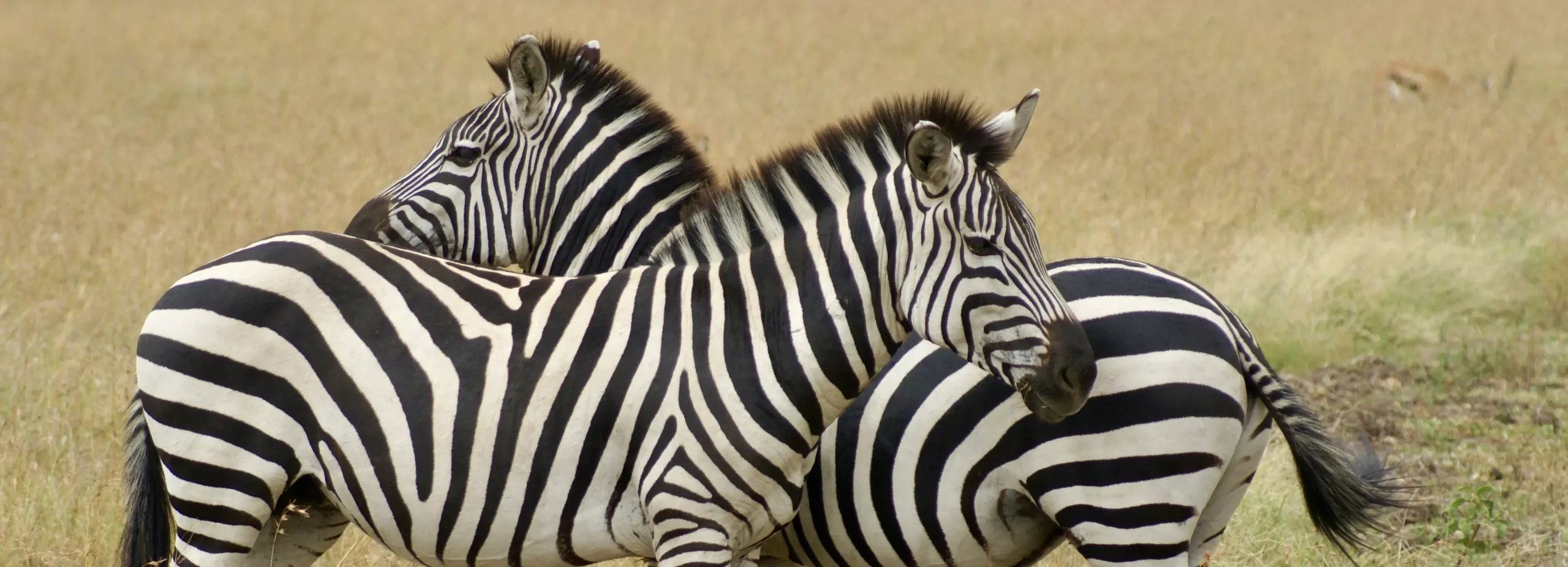
Beyond Seronera, the landscape opens into country where cheetahs hunt across the open plains with breathtaking speed, where vast mixed herds of wildebeest and zebra move on instinctive seasonal rhythms, and where the kopjes — ancient granite outcroppings rising from the grass — provide vantage points for lions surveying their territory. Depending on the season, the northern Serengeti may offer the additional spectacle of wildebeest river crossings at the Mara River, one of the most dramatic recurring wildlife events on the planet.
Game drives extend from before sunrise to after sunset, with midday rest periods at camp if desired. Nights in a tented camp within the Serengeti bring a particular intimacy with the landscape — the sounds of the African night audible through canvas: hyenas whooping, lions grunting their territorial declarations across the dark, the distant bark of zebras in alarm. These are the sounds of a living wilderness, and they are extraordinary.
DAY 6: Tarangire National Park — The Ancient Landscape
Tarangire occupies a unique position in the Northern Circuit — less visited than the Serengeti or Ngorongoro, yet consistently rated among Tanzania's finest wildlife experiences by those who know it well. Its landscape is ancient in feeling: the enormous baobab trees that punctuate the savannah create a timeless atmosphere, their swollen trunks bearing the marks of centuries of elephant activity — bark stripped, wood hollowed, the trees themselves shaped by their relationship with the animals that surround them.
The Tarangire River runs through the heart of the park, and during the dry season it functions as a magnet for wildlife from an enormous surrounding catchment area. Elephant families number among the largest in Africa here — herds of thirty, forty, fifty individuals moving in complex, matriarch-led social structures that have been studied for decades. Lions are resident and active, leopards inhabit the riverine woodland, and the diversity of plains game — oryx, eland, gerenuk, and lesser kudu alongside the more familiar species — reflects the park's position at the intersection of multiple East African ecosystems.
DAY 7: Arusha Markets and Departure — A Final Cultural Connection
Your final morning in Tanzania is spent not in the bush, but in the streets of Arusha — a fitting conclusion that connects the wilderness experience with the human culture that gives it context. The Maasai Market and the central Arusha market are vibrant, genuinely African spaces: stalls piled with handcrafted beadwork, hand-carved wooden figures, Tingatinga paintings, Maasai blankets, locally grown spices, and the particular energy of a working East African market town.
Your guide will accompany you, offering cultural context and navigating the social landscape of the market with ease. This final morning enriches the safari experience — a reminder that the wilderness of Tanzania exists within a broader culture of remarkable depth and beauty. Transfer to Kilimanjaro International Airport for your onward journey.