
DAY 1: Arrival in Arusha — Safari Gateway
Arrival at Kilimanjaro International Airport and transfer to your lodge in Arusha, set at the foot of Mount Meru amid the green highlands of northern Tanzania. The JUA EXPLORER team meets you with your personalised itinerary and a thorough briefing on the days ahead, including a specific explanation of the calving season dynamics and what conditions are expected during your visit. Dinner and overnight in Arusha.
DAY 2: Lake Manyara National Park — The Safari Begins
The Mazalia ya Nyumbu safari opens at Lake Manyara — a park of extraordinary ecological range that sets the tone for the journey to come. Entering through the groundwater forest, your vehicle moves through habitats that transition from closed canopy to open woodland, from floodplain to alkaline lake, each zone revealing new species and new behaviour. Elephant families move through the forest with characteristic silence; tree-climbing lions rest in the fever tree branches; the lake margins pulse with birdlife.
Lake Manyara during the calving season's green months — January through March — is lush, dramatically lit, and exceptional for photography. The surrounding Rift Valley escarpment creates extraordinary evening light, and the flamingo concentrations on the lake can be vast during this period. A full day of game viewing before overnight at an escarpment lodge.
DAY 3: Ngorongoro Crater — The Prelude
The drive to Ngorongoro ascends through highland forest and moorland, with expanding views back across the Rift Valley and forward toward the crater highlands. Arriving at the rim in the morning, you descend immediately to maximise your time on the crater floor.
The crater provides an extraordinary contrast to the open plains of Ndutu that await — here, the wildlife is contained, dense, and readily observable in a landscape that offers both dramatic beauty and the intimacy of close encounters. The Big Five are all present, with the black rhinoceros offering the most reliable sightings available anywhere in Tanzania. Spend a full, rewarding day before ascending to the rim for overnight, with the knowledge that tomorrow you travel to the heart of one of the world's greatest wildlife spectacles

DAYS 4, 5 & 6: Ndutu and the Southern Serengeti — Three Days at the Calving Grounds
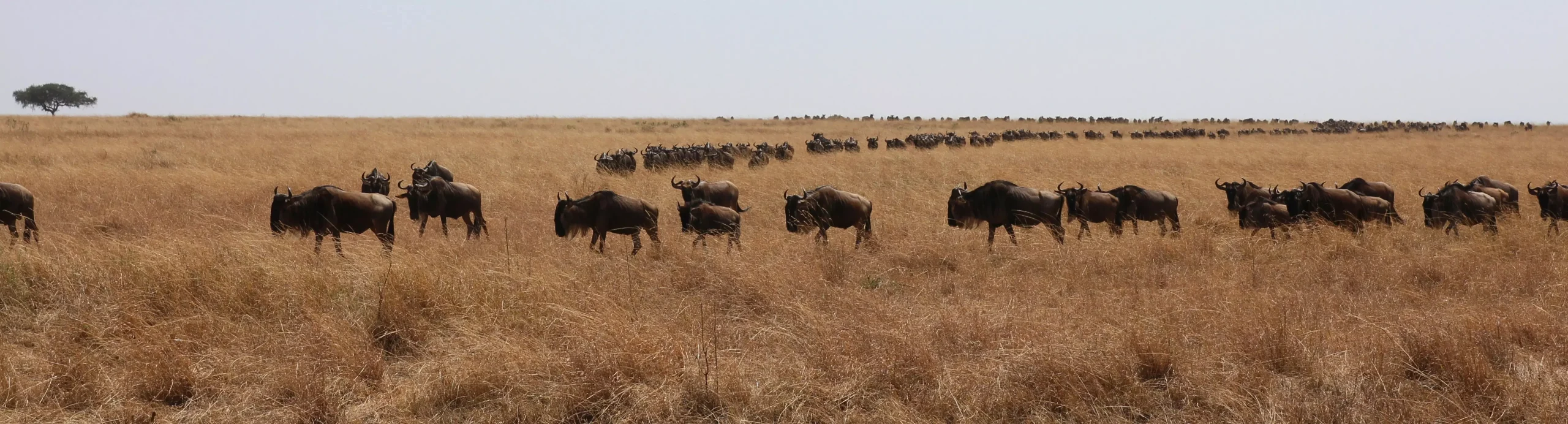
Three consecutive days in the Ndutu region and the southern Serengeti is the correct duration for understanding what is happening here. A single day gives a glimpse; three days gives comprehension. By the third morning, you have learned to read the landscape — the distant dust cloud that indicates a lion on a kill, the clustering of vultures that marks a carcass, the way the wildebeest herds compress and then expand as a predator moves through them.
The Ndutu plains during calving season are unlike any other wildlife environment on Earth. The density of animals is extraordinary: wildebeest as far as the eye can see, zebras moving in family groups through the herds, Thomson's and Grant's gazelles in their thousands, and above them all the theatrical attendance of predators drawn from across the southern Serengeti by the abundance of vulnerable prey.
Your JUA EXPLORER guide will position the vehicle for maximum wildlife exposure at each hour of the day. Dawn drives catch predators in their final hunts of the night; mid-morning is the most productive time for witnessing births and the first, vulnerable hours of a calf's life; afternoons bring cheetah activity as temperatures begin to drop; late afternoon light is the finest of the day for photography, as the low sun catches the dust and the animals in the particular golden quality that makes Ndutu images so compelling.
Specific areas your guide will target include the Ndutu woodlands — where leopards are occasionally found — the open plains around the seasonal lakes where wildebeest concentrate most densely, and the grassland corridors between Ndutu and the Serengeti proper, where lion prides establish temporary territories around the calving grounds. Sunrise and sunset drives are standard practice throughout these three days.
DAY 7: Tarangire National Park — The Closing Chapter
From the drama of Ndutu, the final safari day in Tarangire feels both contrasting and complementary. The ancient baobab landscape, the great elephant herds, the quieter rhythms of a park that moves at its own unhurried pace — these qualities provide exactly the right closing note for an intense, emotionally rich calving season experience. A final morning game drive along the Tarangire River before returning to Arusha.
From the drama of Ndutu, the final safari day in Tarangire feels both contrasting and complementary. The ancient baobab landscape, the great elephant herds, the quieter rhythms of a park that moves at its own unhurried pace — these qualities provide exactly the right closing note for an intense, emotionally rich calving season experience. A final morning game drive along the Tarangire River before returning to Arusha.
DAY 8: Arusha Markets and Departure — A Cultural Farewell
A final morning in Arusha offers the opportunity to engage with the city's remarkable market culture — handcrafted Maasai beadwork, Tingatinga paintings, carved wooden wildlife sculpture, locally sourced spices, and Tanzanian textiles, all available in the central market and the Maasai cultural market adjacent to the Clock Tower. Your guide will accompany you, providing cultural context and ensuring you leave Tanzania with souvenirs that carry genuine meaning. Transfer to Kilimanjaro International Airport for departure.